
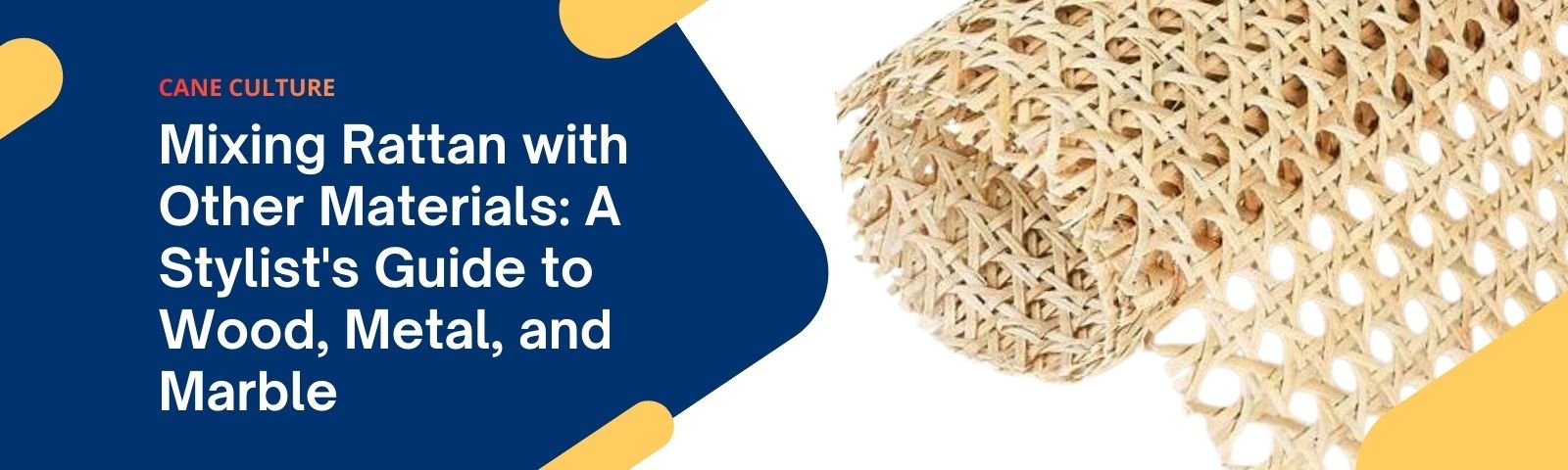
Mixing Rattan with Other Materials: A Stylist’s Guide to Wood, Metal, and Marble
Let’s talk about a room that feels… flat. Everything is nice. The sofa is fine, the table is fine, the lamp is fine. But it has no heartbeat. It feels like a furniture showroom, not a home. The problem usually isn’t the pieces themselves. It’s that they’re all speaking the same language. They’re all the same texture, the same finish, the same “feel.”
The secret to a room that feels alive, sophisticated, and deeply personal is contrast. Not color contrast—texture contrast. And there is one material that is the ultimate texture translator, the perfect peacemaker between hard and soft, warm and cool: rattan and cane. This balance of texture and function reflects centuries of traditional cane craftsmanship that continues to influence modern interior design.
I used to think rattan had to be the star of the room. A whole set. Then I put a single cane-back chair at a heavy wooden desk. The room changed. The cane didn’t shout “boho.” It whispered “balance.” It became the bridge.
This is a guide to building bridges. We’ll explore how to pair the organic weave of cane with three foundational materials: wood, metal, and marble. This is how you move from “decorated” to “designed.”
The Main Idea: Rattan as the Translator
Before we mix, we need to know what rattan does. It is a natural material that has a texture, is warm, and lets air flow through it. Its job is to do the following in any combination:
- Make hard lines and cold surfaces less sharp.
- Make cool tones look warmer by adding color.
- Add pattern (the weave) without changing the color.
- Make a heavy piece look lighter.
Think of it as the salt that goes into a dish. You don’t eat a bowl of salt. A pinch makes everything else taste more like itself. Rattan makes wood feel more expensive, metal feel more comfortable, and marble feel more like home.
Combination 1: Rattan and wood (The Soulful Conversation)
This is the most natural match. Both are made from plants. The type of wood and the job of the cane are what make it work.
The Classic: A cane and warm, rich wood (like teak, walnut, or mahogany)
- The look: classic, grounded, and classy. Picture a mid-century credenza with door inserts made of cane webbing. Using natural cane webbing in furniture panels adds breathable texture while maintaining the warmth of solid wood. Or a dining table made of solid teak with chairs that have backs made of cane.
- Why it works: The warm wood gives it depth and strength. The cane inserts or chair backs break up the big wooden planes, which makes them look lighter and more interesting. The cane makes the wood feel less heavy and imposing.
- How to style it: The wood should be the main focus. Use cane as an accent in chair backs, cabinet panels, or as a lampshade on a wooden base. This is the best cane furniture made of teak. It has a sense of history and modernity.
The Modern Twist: Cane + Light or Painted Wood (Oak, Ash, Whitewash)
- The Look: Airy, Scandinavian, coastal. A white oak bed frame with a cane headboard. A pale ash table with woven chairs.
- Why it works: The light wood is clean and simple. The rattan adds the necessary texture and warmth to keep the space from feeling sterile or cold. It brings in a handmade, artisanal quality.
- Stylist’s Tip: For a crisp, organic modern interior design, pair light wood with rattan that has a tighter, more graphic weave (like a herringbone or a tight sheet cane).
Combination 2: Rattan and Metal (the Right Amount of Tension)
This is where the magic of contrast really shines. The soft, natural curves of cane are different from the hard, industrial, straight lines of metal. In outdoor furniture or high-traffic settings, artificial cane webbing offers the same woven aesthetic with added durability.
The Iconic: Black Metal and Cane
- The Look: modern, graphic, and sure of itself. A chair with a black steel frame and a cane seat and back. A four-poster bed made of black metal with cane panel inserts.
- Why it works: The black metal is sharp and clear. It gives shape. The cane takes away any harshness right away, making the piece feel welcoming and easy to get to. It’s the recipe for the best metal-legged cane furniture.
- How to wear it: This look is a statement. Make it the main point. Add some softer fabrics, like linen or wool, around it, and maybe a little warm wood to make it feel more stable. It’s edgy, but it’s still livable.
The Soft Industrial: Cane and brushed or polished metal (brass, bronze, iron)
- The look is warm, layered, and classy. A console table with a cane shelf and brass frame. A rattan pendant light hangs over a dining table with a bronze base. Bamboo lighting designs often complement stone and metal interiors by adding a warm natural texture to otherwise cool surfaces.
- Why it works: The warm metal goes well with the honey tones of natural cane. They both have a “living” quality, like metal patinas and cane ages. When put together, they give off a feeling of quiet luxury and history.
Combination 3: Rattan + Stone (The Unexpected Harmony)
This is the advanced class. Stone (marble, travertine) is the ultimate in cold, hard, luxurious permanence. Rattan is its perfect counterpoint.
The Luxe Organic: Rattan + Marble
- The Look: Refined, serene, effortlessly chic. A hefty marble coffee table with a delicate rattan side table next to it. A cane-back chair pulled up to a marble-topped desk.
- Why it works: Marble can feel formal and untouchable. Rattan immediately brings it down to earth, injecting warmth and casual elegance. The rattan and marble combination says, “This is beautiful, and you are allowed to live here.”
- Stylist’s Secret: Don’t match the rattan to the marble’s veining. Let them be separate voices. A simple, clean cane weave against dramatic Calacatta marble is breathtaking.
The Stylist’s Toolkit: Rules for Mixing Textures Like a Pro
- The 70-20-10 Rule (Adapted): Let one material dominate (~70% of the visual weight—e.g., wood floors, a large sofa). Let the second material be a strong secondary presence (~20%—e.g., metal light fixtures, a marble table). Use rattan as your final, textured accent (~10%—a cane chair, a bamboo shade, a small basket). This prevents the “theme park” effect.
- Repeat the Rhythm: Don’t let your one rattan piece float alone. Echo the texture elsewhere. A cane chair can be complemented by a jute rug, a linen throw, or a ceramic vase with a ribbed texture. This creates a cohesive language of mixing textures in home decor.
- Mind the Scale: A thick, chunky rattan weave pairs well with substantial wood or stone. Understanding the differences between natural vs artificial cane webbing can also help you select the right material for different interior environments. A fine, delicate cane weave looks elegant with slim black metal or polished marble.
- The Unifying Element: Often, this is color. A room of wood, black metal, and cane can be tied together with a neutral palette of creams, blacks, and warm beiges. Let the textures provide the interest.
Conclusion
The Last Layer: It’s All About Feeling
You aren’t just putting a metal table next to a cane chair. You are making a big deal. You are balancing weight with lightness, cool with warm, hard with soft.
The goal is to make the room feel like it was made just for you and that you thought about it. A room where your eyes move around and find little conversations between the materials, like the chat between the marble and the cane or the friendship between the wood and the metal.
Start with one pairing you love. Make a corner around it. See how the energy of the space changes. You’re not just putting up decorations. You’re making an orchestra of textures. And rattan is the most useful tool you have. Exploring a cane and rattan materials collection can help you experiment with these texture combinations in your own space.
Frequently Asked Questions
I have an all-wood room. Won’t a cane chair just disappear?
No—it will relieve the room. If everything is the same wood tone and finish, the space can feel like a sauna. A cane chair, especially with a light fabric cushion, introduces a new texture and a break in the pattern, making the wood itself look more intentional and beautiful.
Can I mix rattan with chrome or stainless steel?
You can, but it’s a cooler, more retro look (think 1970s office). To make it feel current, ensure the rattan piece has a strong, modern shape. A classic Peacock chair with chrome legs can feel intentionally eclectic. A simple cane stool with chrome details feels very now.
How do I avoid the “beach house” or “tropical” cliché?
The cliché comes from overuse and predictable pairings (rattan + lots of blue + seashells). To avoid it, anchor your rattan in unexpected contexts. Pair a rattan daybed with a sleek wool blanket and a black floor lamp. Put a cane pendant in a minimalist kitchen with concrete counters. It’s all about contrast.
Is there a material rattan doesn’t go with?
It struggles with very high-gloss, plastic-y finishes (like some lacquers or vinyl). The natural, matte, handcrafted soul of rattan clashes with the synthetic perfection. It also can feel off with overly ornate, gilded furniture—the styles fight each other.