
How to Clean and Maintain Your Cane Furniture & Lampshades
You found the perfect chair. Or maybe you finally installed that beautiful cane lampshade. It adds warmth, texture, and personality to your room. But now, a new kind of worry sets in. You see a layer of dust settling into the weave, or a splash of tea near the armrest. A silent question forms: How on earth do I clean this thing without ruining it?
I understand that fear completely. I’ve stood frozen with a wet cloth in my hand, terrified that one wrong move would turn my favorite piece into a saggy, moldy mess. Here’s the truth I learned the hard way: cane isn’t fragile, but it is specific. Treat it wrong, and yes, you can damage it. Treat it right, and it will look beautiful for decades.
The Golden Rule: Know Your Material
First, the most important step: identify what you have. The care for natural cane and artificial cane is different. Using the wrong method is the biggest mistake you can make. If you’re unsure what you own, understanding the difference between natural vs artificial cane webbing can prevent costly cleaning mistakes.
- Natural Cane/Rattan/Wicker: This is plant material. It can absorb liquids and is affected by humidity and dryness.
- Artificial/Synthetic Cane: This is plastic-based (often PVC or PET). It is waterproof and color-fast, designed to resist the elements.
The advice below will specify which is which. When in doubt, assume it’s natural unless you bought it specifically as outdoor furniture.
Your Simple, Step-by-Step Cleaning Guide
For Dust & Everyday Grime (All Types):
This is your most frequent task. Forget wet cloths for now.
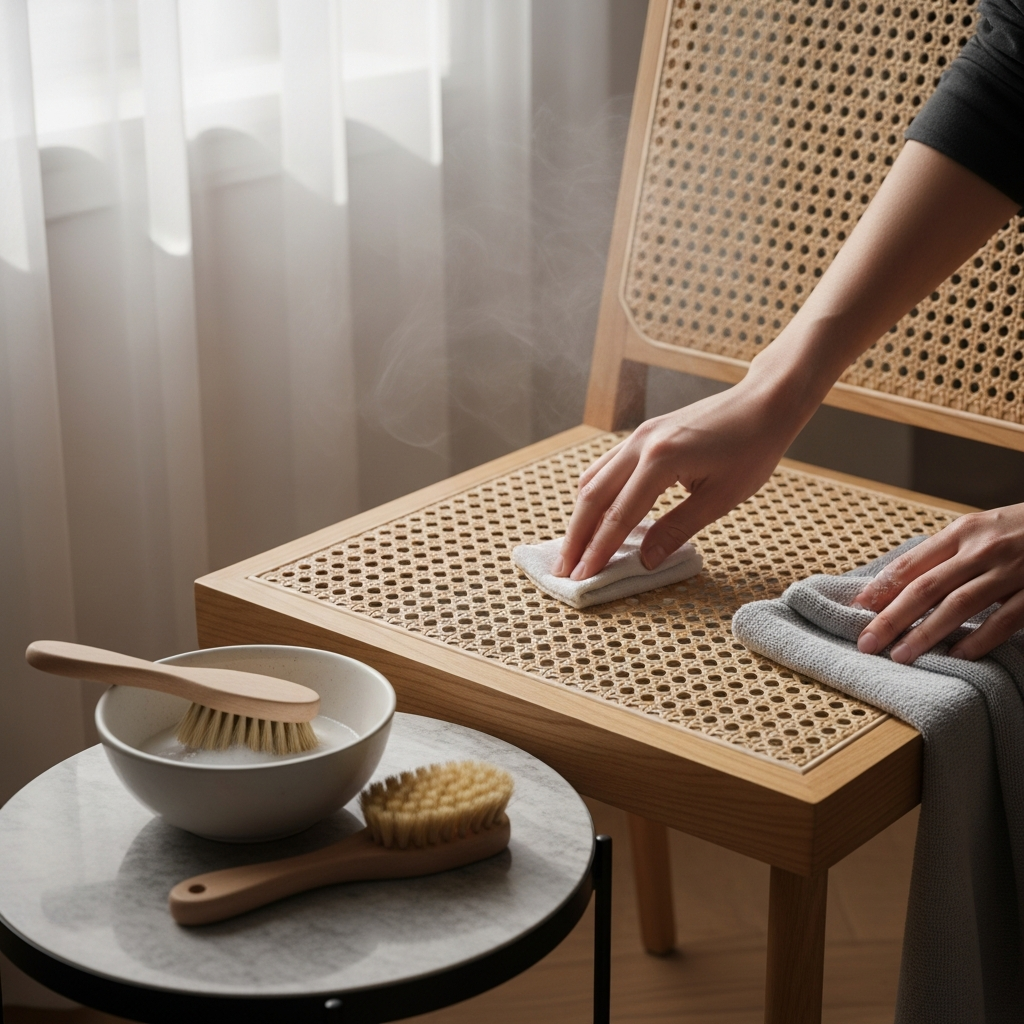
- Get a soft-bristled brush. A clean paintbrush, a soft makeup brush, or a dedicated dusting brush is perfect.
- Gently brush in the direction of the weave. This loosens dust from the crevices without snagging.
- Follow with a dry, soft microfiber cloth. This picks up the dust you’ve loosened. For bamboo lampshade cleaning, always brush and dust downwards, from the top rim to the bottom, to avoid pushing dust up inside the shade.
- Frequency: Do this weekly or bi-weekly in dusty Indian homes. It’s the single best thing you can do to keep it looking fresh.
For Stains and Spills (The “Uh-Oh” Moment): For Natural Cane:
- Do it quickly. Use a dry cloth to soak up any liquid right away. Don’t rub.
- Make a cleaning solution that isn’t too strong. In a bowl of cool water, mix in a small amount of mild dish soap, like baby shampoo. You want bubbles, not a bath full of soap.
- Don’t soak, just dampen. Soak a soft cloth in the suds, then wring it out until it’s almost dry.
- Wipe the dirty area gently, following the weave.
- Use a second cloth that has been dipped in clean, cool water and wrung out well to rinse right away.
- Get it completely dry. Blot the piece with a dry cloth, then let it air dry completely in a room with good air flow, away from direct sunlight or heaters. This stops mildew and water stains.
For Artificial Cane:
This is much easier.
- Wipe the spill with a damp cloth.
- For tougher grime, use a mild soap solution, wipe, and then rinse with a clean damp cloth.
- You can even hose down patio furniture made of artificial cane webbing. Just let it air dry.
The Deep Clean (Once or Twice a Year):
Follow the stain-cleaning steps above for natural cane, but do it for the entire piece, section by section. For artificial cane, a wipe-down with a vinegar-water solution (1 part vinegar to 3 parts water) can help remove any built-up residue. Always test on a small, hidden area first.
The Real Secret: It’s Not Just Cleaning, It’s Stopping It
Cleaning makes things right again. Taking care of cane furniture is about protecting the future. These habits are very important.
- Fight the Sun: Direct, harsh sunlight is bad for natural cane. It will make it dry out, break, and lose its color. Put furniture away from windows where the sun shines for hours. Use blinds or curtains. This is an important step to keep the cane from drying out.
- Control the Humidity (Especially in India): During the monsoon season, high humidity can make natural cane absorb water and become loose. Make sure there is good air circulation in coastal areas with a lot of humidity. A fan or dehumidifier in the room can help. On the other hand, the cane can get too dry in rooms with air conditioning that are very dry. Once or twice a year, lightly misting the surface with water from a spray bottle (just a fine mist, not a soak) can help keep it flexible.
- Don’t put too much weight on cane shelves or seats. It is strong, but it shouldn’t have to hold heavy, uneven weight for long periods of time, as this can damage the weave.
- Fix the Sags Before They Start: If your clean cane chair seat is getting a little loose, you can often fix it. For natural cane, use a wet sponge to lightly dampen the bottom of the seat (don’t soak the top!). As it dries on its own, it will shrink and can get very tight. This is a classic way to clean rattan and fix it.
Recent bamboo and cane development initiatives in India reflect the growing recognition of these materials as durable, climate-conscious design choices.
Special Care for Lampshades & Wall Decor
Your lampshades and wall panels need extra gentleness, as they can’t be rinsed.
- Always unplug and let the bulb cool completely.
- Dust weekly with your soft brush to prevent heavy buildup.
- For marks, use the barely-damp sudsy cloth method, but be even more careful with moisture. Immediately dry with a second, dry cloth. Never submerge a lampshade.
- Ensure they are not in a spot where they will get direct splashes (e.g., from a nearby plant being watered).
What NOT to Do: The Short, Scary List
- NEVER use harsh chemicals, bleach, abrasive cleaners, or scrubbing pads.
- NEVER steam clean or pressure wash natural cane.
- AVOID silicone-based polishes or furniture sprays. They create a gummy buildup.
- DON’T let spills sit. Act fast.
Conclusion
A piece of cane furniture is a relationship. The more you care for it gently and consistently, the more beauty and longevity it gives back. It’s not about harsh scrubs; it’s about gentle, regular attention.
A five-minute dusting this weekend can add five years to your chair’s life. That’s a pretty good return on investment. So grab that soft brush, take a deep breath, and show your cane some love. It’s easier than you think. For balconies or humid areas, artificial cane webbing offers a low-maintenance alternative that handles moisture with ease.
Has your well-loved cane piece finally earned a full seat replacement?
Explore our natural and artificial cane webbing to give your favorite frame a fresh start. Finding cane webbing materials and supplies in one place makes it easier to maintain and refresh your furniture properly. And if you’ve mastered the art of care, share your beautifully maintained piece with our community. Replacing worn sections with fresh natural cane webbing can instantly restore strength and beauty to an old frame.
Tag us with #CaneCulture.
Frequently Asked Questions
Is it okay to put oil on my cane furniture?
You can use a little bit of linseed oil or a special rattan oil on a soft cloth every now and then on natural cane. Apply it sparingly and wipe off any extra. This can add a little shine and restore oils. You should only do this once a year, and never on seats (it can make them sticky).
How do I get rid of the smell of moldy cane?
The best ways to get better are to get some sun and fresh air. Put the piece outside in a shady, airy spot for a few hours on a dry, mild day. You can also lightly sprinkle baking soda on it, let it sit for an hour, and then brush or vacuum it off very well.
The fake cane I bought has lost its color on the balcony. Is there a way to fix it?
Artificial cane that is resistant to UV rays is made to not fade, but constant exposure can eventually have an effect. You can’t stop fading. This is why it’s so important to buy good, UV-rated materials for the outdoors right away.
When should you hire a professional to fix or replace something?
Cleaning won’t help if the cane is broken, has big cracks, or has big holes. It’s time to re-web a seat if it can’t be fixed. This is a great time to buy new materials for your frame and give it a new lease on life.





One comment
Pingback:
A Buyer's Guide to Choosing the Perfect Bamboo Lampshade - CANE CULTURE