
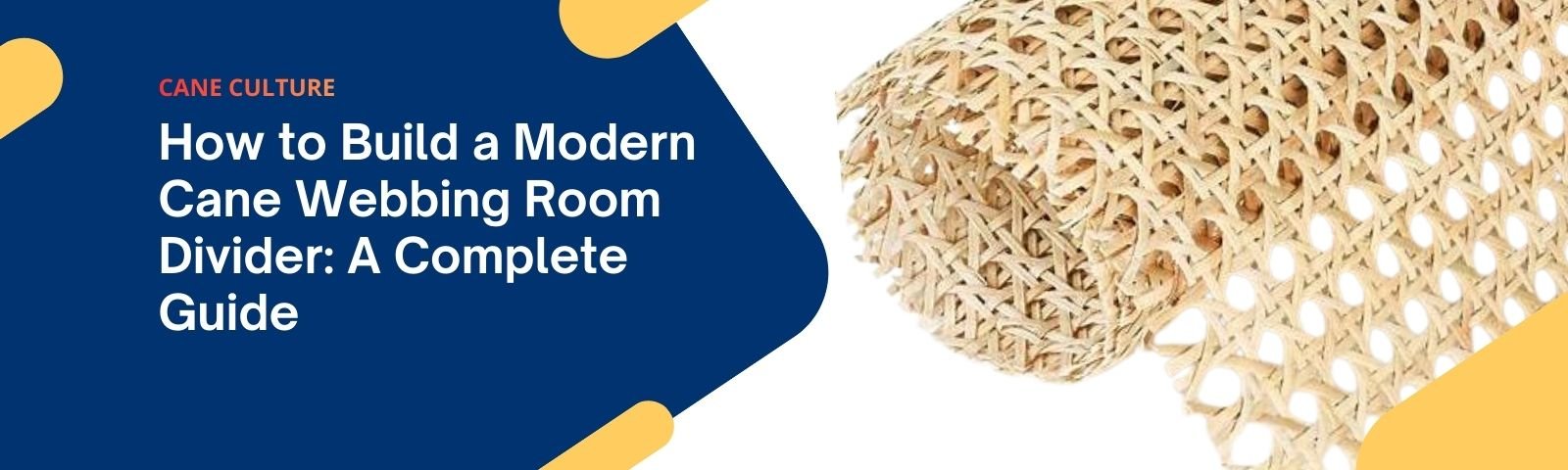
How to Build a Modern Cane Webbing Room Divider: A Complete Guide
Let’s talk about a common modern problem: the open floor plan. You love the light, the space, the flow. But sometimes, you need to carve out a quiet corner for a home office. Or create a dressing area in a studio. Or just hide that pile of laundry from the living room view. A solid wall would kill the vibe, and most store-bought screens feel cheap or flimsy.
I built my first cane divider out of pure necessity. My “home office” was a corner of my living room. I needed a visual boundary without feeling closed in. The result wasn’t just functional; it became my favorite piece in the house. It filters light beautifully, adds a layer of texture, and feels like a piece of art.
This guide will walk you through building a freestanding, modern rattan screen that feels professional, not homemade. We’ll use simple, standard Indian timber and a beautiful open-weave cane. Recent bamboo and cane development initiatives in India highlight the growing recognition of these materials in modern design and sustainable craft industries. It’s an intermediate project, but if you follow these steps exactly, you’ll end up with a stunning, custom piece.

Before You Start: Tools, Materials & Mindset
Tools You Must Have:
- Measuring Tape & Pencil
- Mitre Saw or Hand Saw (a local carpenter can make cuts if you don’t have one)
- Power Drill/Driver
- Orbital Sander or Sandpaper (80-grit, 120-grit)
- Carpenter’s Square
- Spline Roller & Small Hammer (for installing cane)
- Utility Knife
- Paintbrushes
If you’re unsure which material suits your space best, reviewing the differences between natural vs artificial cane webbing can help you decide before purchasing.
Materials List (For a 3-Panel Divider, 6ft tall x 15ft total width):
This is our sample size. Adjust calculations for your space.
- Timber (From your local lumber yard):
- 1″x2″ Pine or Teak Batten (for the frames): 12 pieces of 6ft length (for verticals) + 6 pieces of 14″ length (for top/bottom horizontals).
- 1″x1″ Batten (for the internal support lattice): 4 pieces of 6ft length.
- ¾” Round Dowels (for hinge pins): 2 pieces, 6 inches each.
- From Cane Culture:
- Cane Webbing: French Weave (Open Weave) is perfect for this.For indoor room dividers, natural cane webbing provides the ideal balance of flexibility, strength, and warm texture. You’ll need approximately 15-16 square feet for a 3-panel divider. Calculate: (Panel Width x Panel Height) x Number of Panels. Add 10% for waste.
- Cane Spline: About 15-20 meters. Better to have extra.
- Consumables:
- Wood Glue (Fevicol MR works great)
- ¾” Wood Screws (1.5 inch length)
- 1″ Panel Pins (tiny nails)
- Wood Filler
- Sanding Sealer & Paint/Stain of your choice (e.g., matte black, natural teak oil, whitewash)
The Blueprint: Measurements & Cut List
Each panel will be a simple rectangle. For a freestanding screen, we’ll make three identical panels and hinge them.
- The final panel is 6 feet tall and 18 inches wide, with an opening for a cane on the inside.
- Overall Divider Size: 6ft Tall x ~4.5ft Wide (when folded), 13.5ft wide (when fully open).
Cut List for Each Panel:
- Two pieces of 1″x2″ wood, each cut to 72 inches, make up the vertical stiles (long sides).
- Top & Bottom Rails (Short sides): 2 pieces of 1″x2″ timber, cut to 14 inches (This gives an 18″ inner width after accounting for the 1″ stiles on both sides).
- Internal Lattice Support: 2 pieces of 1″x1″ batten, cut to ~70 inches. These will go up and down inside the frame to keep the cane from drooping.
Tip: If you’re not sure, ask your lumber yard to make these cuts for you. Accuracy is everything.
Step-by-Step Construction: Putting Together the Frame
Step 1: Put together the outer frame
Put your two long stiles (72″) and two short rails (14″) on a flat surface. Put wood glue on the ends of the rails. Put them between the stiles so that they make a perfect rectangle. Check that each corner is exactly 90 degrees with your carpenter’s square.
Drill pilot holes first so that the wood doesn’t split. Use two 1.5″ wood screws to hold each corner in place. As soon as you see glue that has come out, wipe it away with a wet cloth. Give the glue an hour to dry.
Step 2: Put in the Internal Lattice Support
The wide panel needs help to keep the cane tight. Mark the inside of your frame at about 1/3 and 2/3 of the way across the width. Put glue on the back of your 1″ x 1″ battens. Place them vertically along these lines inside the frame. Every 6 inches, use 1″ panel pins to hold them in place. This makes a strong backbone.
Step 3: The All-Important “Groove” (The Cane’s Seat)
For a clean, professional look, we’ll create a false groove. Cut thin strips from your leftover 1″x2″ batten—about ¼ inch thick and ½ inch wide. These will be your “spline stops.”
Inside your frame, along all four sides and up both sides of your internal lattice, apply a thin, continuous bead of wood glue. Carefully press these thin strips into the glue, creating a raised ledge about ½ inch from the very back edge of the frame. This ledge is what the cane will sit against. Clamp or pin them in place until dry. This method is cleaner than routing a groove for a one-off project.
Step 4: Sand, Fill, Finish
This step makes it look store-bought. Sand the entire frame thoroughly, starting with 80-grit to remove rough spots, then 120-grit for smoothness. Pay special attention to the corners. Fill any screw holes or gaps with wood filler, let dry, and sand again.
Apply a sanding sealer. Then, paint or stain your frame. A matte black or dark walnut stain makes the cane pop. A white or natural oil finish gives a softer, Scandinavian look. Let it dry completely. Do this before installing the cane.
Step-by-Step Installation: Stretching the Cane
Step 5: Cut & Soak the Webbing
Measure the internal opening of one panel (from inside edge of your “groove” strip). Add 2 inches to both dimensions. Cut your French cane webbing to this size. Soak it in room-temperature water for 10 minutes. It will become flexible.
Step 6: Secure the Cane
Place the damp webbing over the back of the frame. It should overlap your glued “stop” strips. Start at the center of the top horizontal rail. Using your spline roller, press the webbing firmly down against the stop strip.
Now, take a length of cane spline. Apply a bead of wood glue on top of the webbing, right where it meets the stop strip. Gently tap the spline into the space between the webbing and the outer frame edge, using your small hammer. The spline acts as a wedge, locking the webbing against the stop strip.
Work your way around the entire perimeter and down both sides of the internal lattice this way: roll, glue, tap. Always maintain even tension. Trim excess spline as you go.
Step 7: The Corner & Trim
At the corners, make a small diagonal cut in the overlapping cane to allow it to fold neatly. Once the spline is fully installed and the glue is set (wait 24 hours), use a sharp utility knife to trim the excess webbing flush with the spline.
Step 8: Hinging the Panels & Final Assembly
Lay two panels side-by-side, face down. Position two sturdy hinges (like 3″ brass cabinet hinges) at the top and bottom, about 2 inches from the edge. Mark, pre-drill, and screw the hinges in place. Repeat to connect all three panels.
For a more fluid, sliding cane partition look, you can connect the panels with a simple pin hinge. Drill a hole through the top and bottom of the side stiles where they meet. Insert a ¾” dowel as a pin. This allows the panels to pivot smoothly.
Pro-Tips & Troubleshooting
- Level is Key: Use a spirit level when standing your divider up. Shim the feet discreetly if your floor is uneven.
- Weight for Stability: If it feels top-heavy, you can attach small, flat metal brackets to the bottom back of the outer panels as feet.
- Choosing the Weave: French Weave is ideal as it’s light and airy. If the divider will be used in a semi-outdoor or humid space, artificial cane webbing offers better resistance to moisture. A tighter Madras or Sheet weave will provide more visual privacy but block more light.
- The No-Tool Hinge Alternative: Use heavy-duty leather strips cut from an old belt. Screw them to the sides of the panels to create flexible, attractive hinges.
Conclusion
Stand back. What you’ve built is not just a screen. It’s a light filter, a texture layer, a space definer. It’s a custom piece of furniture that no one else has. It solves a practical problem with grace and style.
This project teaches you more than just how to build a divider; it teaches you how to think like a furniture maker. You’ve taken raw timber and raw cane and created something functional and beautiful. That’s the real reward.
Ready to source the star of this project?
Get the perfect open-weave texture with our French Pattern Cane Webbing. It’s in stock and ready to ship to become the centerpiece of your build.
Build it, share it, inspire others. Tag your creation with #CaneCultureDIY—we can’t wait to see what you make.
Browsing cane webbing materials and supplies in one place makes it easier to gather everything you need for a smooth build.
Frequently Asked Questions
Can I make it bigger or smaller?
Of course. This is what makes a DIY cane room divider so great. Change the cut list so that the rails (the short pieces) are wider. Make sure the vertical stiles are at the height you want them to be (for example, 6 feet). To keep it from wobbling, make sure that no one panel is wider than 24 inches.
Do I have to use the internal lattice support?
Yes, if the panel is more than 12 inches wide. If you don’t use it, the cane will eventually sag in the middle and look bad. The support can’t be seen from the front, and it makes sure the finish is tight.
Is this method good for making a permanent wall partition?
Yes. Make the panel as shown, but instead of using hinges, you can attach it directly to the wall or ceiling with French cleats or hidden brackets. It turns into a permanent room divider made of cane webbing.
Is this project easy for beginners?
It’s perfect for a beginner who is sure of themselves and has done some basic woodworking before. Being able to measure correctly and being patient while installing the cane are the most important skills. If you’ve never used a drill before, practice on some scrap wood first.