
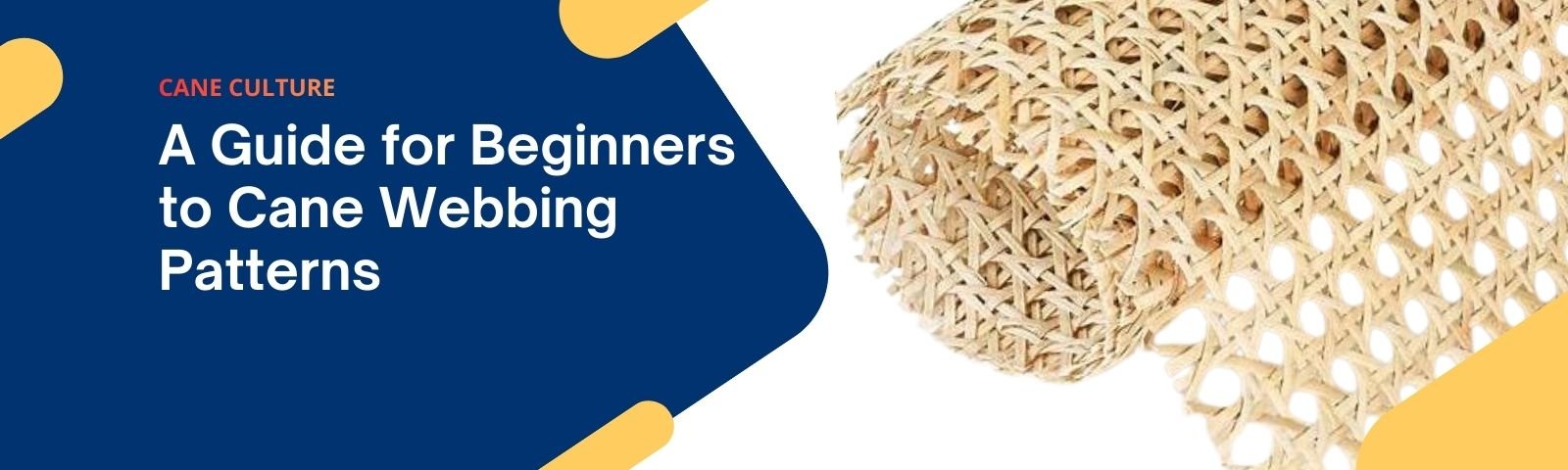
A Guide for Beginners to Cane Webbing Patterns
You made your choice. You might fix up that old chair, make that headboard, or just add a cane panel to a cabinet door. You go to get supplies, and all of a sudden you have to choose between different cane webbing patterns.
At first glance, they all look pretty much the same, don’t they? A lot of holes in different shapes. But I learned the hard way that the pattern isn’t just for looks. Choosing the right pattern matters just as much as installing cane webbing correctly so the final piece looks balanced and intentional. This is the personality of your piece. It’s like the difference between a chair that looks like it belongs in a grandmother’s living room and one that feels new in a modern apartment.
Putting the wrong pattern on a clock is like putting the wrong face on it. The mechanism might work, but it won’t look right. A lot of projects don’t even get off the ground because of this.
So, let’s get that straight. This is like a dictionary for your eyes. We’ll talk about the most common types of cane webbing, but instead of using technical terms, we’ll talk about how each one feels. At the end, you’ll be able to look at a pattern and know exactly what it will do for your room.
1. The Classic: Sheet Cane (Standard Weave)
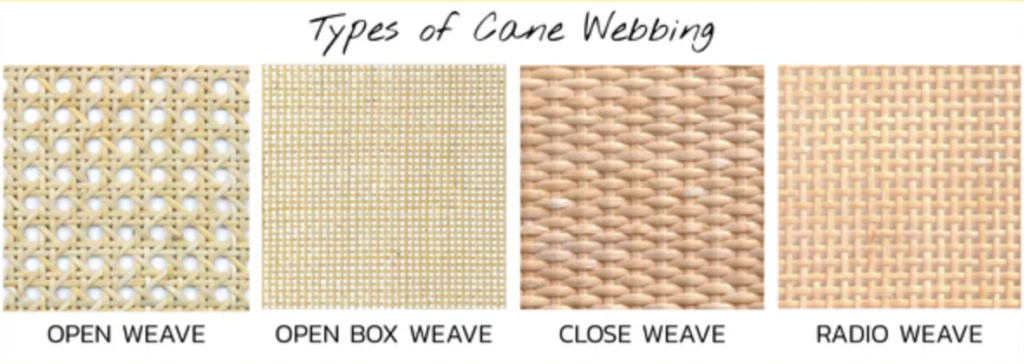
This is the one you know. If you picture a traditional cane chair seat, you’re picturing Sheet Cane. It’s the workhorse, the most common of all cane weaving styles. The weave is a tight, uniform grid of small hexagons (six-sided shapes).
- The Look & Feel: It’s balanced, timeless, and quiet. It doesn’t shout for attention. Because the weave is so tight, it feels solid and substantial.
- Best For: This is your safe, beautiful choice for almost any traditional furniture. Dining chair seats, side chair backs, cabinet door panels, and headboards. If you’re restoring a vintage piece, this is almost always the original pattern. Most vintage restorations use Natural cane webbing because it matches the original material and traditional weave style.
- Think Of It As: The reliable white shirt in your wardrobe. It goes with everything, always looks appropriate, and never goes out of style.
- Good to Know: Its tight weave makes it very strong and durable for seating.
2. The Airy One: French Cane (Open Weave)
Now, let’s open things up. French cane webbing, sometimes called Open Weave, uses the same hexagonal pattern as Sheet Cane, but the holes are much larger. More space, more light.
- The Look & Feel: Light, breezy, and decorative. It has a more casual, almost Mediterranean feel. It’s less about creating a solid surface and more about creating a beautiful, transparent screen.
- Best For: Where you want the cane look but not a solid barrier. It’s stunning on room dividers, as panels in doors where you want partial privacy, or on the backs of chairs where you want a lighter visual weight. In India, it’s perfect for balcony screens that let the breeze through but break the harsh sun. For outdoor or semi-outdoor spaces, Artificial cane webbing offers the same open look with better resistance to weather.
- Think Of It As: A linen shirt. It’s relaxed, breathable, and feels effortlessly stylish.
- Good to Know: Because it’s more open, it’s generally not recommended for heavy-duty seat bottoms, but it’s perfectly strong for backs and decorative panels.
3. The Herringbone Weave: A New Look
This is where cane becomes modern. Don’t worry about hexagons. Herringbone rattan weave is a dynamic, diagonal pattern of straight lines that makes a classic “V” or zigzag shape, like the bones of a fish (hence the name).
The look and feel: modern, graphic, and full of motion. It looks like it was made on purpose and with art in mind. It gives a piece more life than a static grid does.
Best For: Saying something. It looks great on big surfaces like modern headboards, statement cabinet fronts, or the back of a sleek armchair. It looks great with metal frames, simple lines, and minimal decor. It shows that cane isn’t only for cottage-core; it’s also for loft apartments.
Think of it as a custom blazer with a big pattern. It looks classy, catches the eye, and makes everything else look better.
It’s good to know that the diagonal structure is very strong. It’s a beautiful and long-lasting choice for seating.
4. The Ladder Weave: Sleek and Simple
This pattern takes things down to their most basic parts. Think of thin, horizontal cane strands that are held in place by wider, vertical ones at regular intervals. It looks like a… well, a ladder.
The look and feel are simple, neat, and straight. It has a Scandinavian or Japanese style. It adds a very clean, textural element to a room and is calm and organized.
Best For: Making things feel calm and orderly. It looks great on sliding closet doors, plain wall panels, or furniture where you want texture but not a lot of pattern. It works great for a Japandi-style home that mixes Japanese minimalism with Scandinavian comfort.
Think of it as a pair of pants that fits you perfectly and is a neutral color. It looks classy and understated, and it makes a clean base.
It’s good to know that it’s very flexible because it’s so simple. Depending on what you wear it with, it can look both modern and rustic.
How to Choose: It’s About More Than Just Looks
So, you see the patterns. How do you pick? Stop staring at the webbing in isolation. Ask these questions about your project:
- What’s the Vibe of the Piece? Is it a sturdy, traditional dining chair (Sheet Cane)? A light, decorative side table (French Cane)? A bold, contemporary console (Herringbone)?
- Where is it Going? In a busy, patterned room? A quieter pattern like Sheet or Ladder weave might balance it. In a minimalist space? Herringbone or Ladder can be the star textural element.
- Function or Decoration? Is it a seat that needs strength (Sheet, Herringbone) or a screen that needs light to pass (French, Ladder)?
- Look at the Frame: A chunky, carved wooden frame often sings with a classic Sheet Cane. A thin, black metal frame can look incredible with the graphic punch of Herringbone.
Conclusion
The first creative choice you make for your project is what kind of cane webbing to use. It’s where you put your style on display. Don’t be scared of it. Look at it as the fun part.
What I think? If you can, get small samples. In the real light of your room, hold them up to the frame of your furniture. Put them over the chair and step back. Your gut will tell you which one is right.
This isn’t about finding the “best” pattern. It’s about getting the material and your vision to talk to each other. That’s where the real magic of making something happens.
Are you ready to talk?
Look through our collection of cane webbing patterns to see the fine details of Sheet, French, Herringbone, and more. Find the one that speaks to you.
Exploring a complete cane webbing patterns collection makes it easier to compare weaves side by side before deciding.
Frequently Asked Questions
I want a modern look. Is cane only traditional?
Not at all! This is the biggest misconception. While Sheet Cane is classic, patterns like Herringbone and Ladder are thoroughly modern. Cane is a natural material, and modern design loves natural materials. It’s all about the pattern and the frame you put it in.
Is a more open weave (like French Cane) weaker?
For a seat that will have someone plopping down on it daily, a tighter weave like Sheet Cane is the proven choice. However, for chair backs, cabinet doors, room dividers, or any non-load-bearing application, open cane webbing like French weave is perfectly strong and durable. It’s about using the right tool for the job.
I’m restoring an antique. How do I know which pattern to use?
Look closely at the old, broken cane. Can you see the ghost of the pattern? Most Indian and Western antiques from the 20th century used Sheet Cane (Standard Weave). Taking a clear photo and showing it to a supplier (like us at Cane Culture) can also help. We see these patterns all day.
Knowledge of traditional cane and rattan craft helps explain why certain patterns were commonly used in older furniture.
Where can I see these patterns clearly to choose?
Photographs on a screen can be tricky. The best suppliers will have close-up, high-resolution images that show the weave detail. We make sure our product photos for each rattan webbing design clearly show the texture and scale so you can choose with confidence.





2 comments
Pingback:
Common Cane Webbing Mistakes and How to Avoid ThemPingback:
Sustainable Rattan Story: Cane, Eco Materials Guide Use