
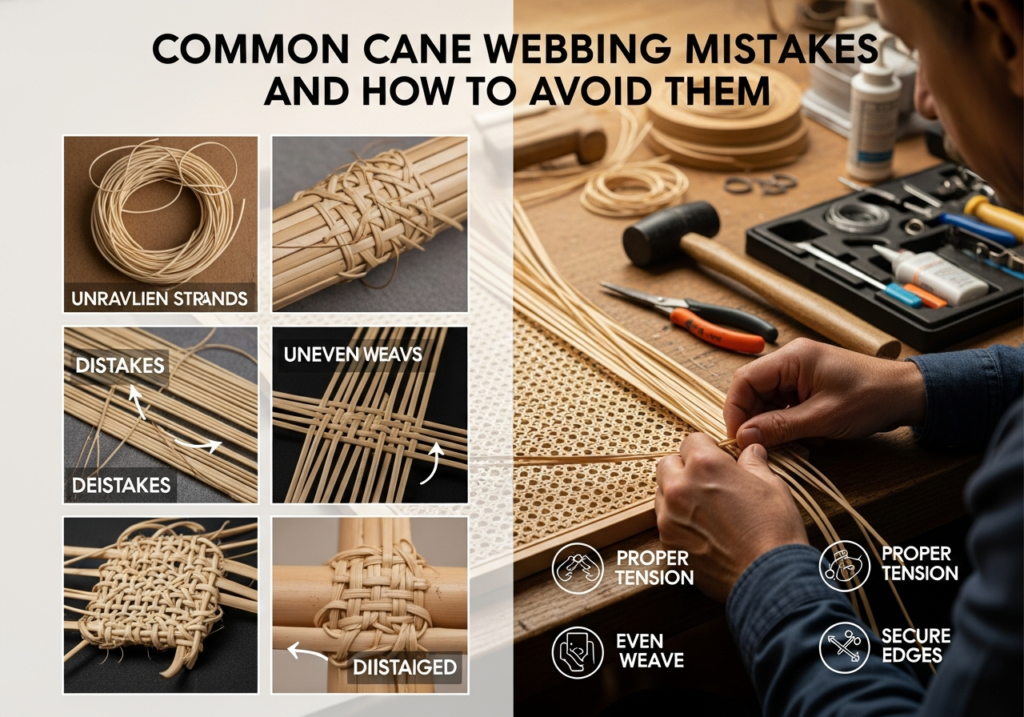
Common Cane Webbing Mistakes and How to Avoid Them
I remember my first cane webbing project. It was an old chair from a flea market, and I was so excited. I had the webbing, a hammer, and a can-do attitude. A few hours later, I had a loose, wrinkled seat that sagged when I touched it. I’d wasted good material and felt completely defeated. Sound familiar?
Here’s what I’ve learned since: every single cane webbing mistake has already been made by someone else. Probably by me. These errors aren’t signs you’re bad at this; they’re just the learning curve of the craft. The difference between a failed project and a beautiful, tight seat isn’t some secret talent. It’s knowing the pitfalls before you start. Many common mistakes happen when the Cane webbing patterns for beginners are not matched correctly to the project or furniture frame.
Think of this as your friendly troubleshooting guide. We’re not here to point fingers. We’re here to say, “Oh, that happens! Here’s exactly how to fix it, or better yet, avoid it in the first place.” Let’s turn those diy cane webbing errors into your last mistakes.
Mistake #1: Skipping the Soak (For Natural Cane)
This is the cardinal sin for beginners. You unroll the natural cane webbing, it seems flexible enough, so you start stapling or rolling it into the groove. This issue is especially common when working with Natural cane webbing, which always needs proper soaking before installation.
- The Problem: Dry natural cane is brittle. As you pull it tight, the individual strands can’t stretch and flex. They snap with a tiny ping sound. You end up with weak spots, a loose weave, or a complete break that ruins the whole sheet.
- The Fix (and Prevention): This one is non-negotiable. You must soak natural cane. Submerge it in a tub or tray of room-temperature water for 10-15 minutes. It will become pliable, like wet leather, and will stretch beautifully without breaking. If you’re in a dry or hot part of India, you might even mist it during installation to keep it flexible.
- Remember: Artificial cane does NOT need soaking. Choosing Artificial cane webbing avoids this soaking step altogether and reduces the risk of cracking during installation. This rule is for natural material only. Growing interest in bamboo and cane material initiatives highlights why proper handling and preparation of natural fibers is increasingly important.
Mistake #2: Not Using the Right Tool to Set the Webbing
I tried using a flat-head screwdriver. I’ve seen people use a chisel or even the back of a spoon. This is a major cause of cane weaving problems and a messy finish.
- The Problem: These improvised tools don’t press the webbing evenly into the groove. They can catch on strands, tear them, or leave the webbing bunched up. When you hammer in the spline later, it locks in this uneven mess, leading to a loose seat. This is the main answer to “why is my cane webbing loose?”
- The Fix (and Prevention): Invest in a spline roller. It’s a simple, inexpensive tool with a rounded end made for this one job. You roll it firmly along the groove before adding glue or spline. This action tucks every strand down deep and evenly, creating a smooth, flat bed for the spline to lock onto. It’s the single most important step for a tight finish.
Mistake #3: Ignoring the Groove (The Frame is Part of the Job)
You get focused on the webbing and forget the chair itself. A dirty, uneven, or damaged groove is a recipe for failure.
- The Problem: Old glue, bits of previous cane, or dirt in the groove prevent the new webbing and spline from seating properly. Even a small obstruction can create a bump that leaves a whole section loose. In humid climates, an unchecked groove might also have hidden mould or rot.
- The Fix (and Prevention): Before you even measure your webbing, clean the groove meticulously. Use a narrow flat-head screwdriver, a small chisel, or even a dedicated groove cleaner to scrape out every bit of old material. Wipe it down with a dry cloth. Run your finger along it—it should feel smooth and clear from corner to corner. A clean groove is the foundation of your project.
Mistake #4: Wrong Spline Size or Poor Installation
The spline is the lock. If it’s too small, the lock is broken. If it’s forced in wrong, the door jams.
- The Problem: Using spline that’s too thin for the groove means it will never create enough pressure to hold the webbing tight. It will feel loose when tapped in. Forcing spline that’s too big will split it or damage the groove. Also, not applying a thin bead of wood glue in the groove before inserting the spline is a missed opportunity for a permanent hold.
- The Fix (and Prevention): Match your spline to your groove. It should be a firm but not impossible press-fit. Always put a thin line of wood glue in the groove first. When tapping the spline in with a small hammer, don’t rush. Use gentle, consistent taps, working your way around the frame. If a section feels loose, you can often carefully pry up that piece of spline, add a dab more glue, and re-seat it.
Mistake #5: Uneven Tension & Bad Corner Folds
You start stapling or rolling on one side and just work your way around. The corners end up a bunched-up mess.
- The Problem: This creates uneven pull. One side of the seat ends up tighter than the others, leading to warping and premature sagging. Messy corners are the biggest visual giveaway of an amateur job.
- The Fix (and Prevention): Think of it like tightening a lug nut on a car tire. You work in a star pattern.
- Start at the middle of one long side and secure it.
- Go directly to the middle of the opposite side and pull it tight.
- Then do the same for the two short sides.
- Always work from the middle of each section outwards to the corners.
For corners, make a single, small diagonal cut into the excess webbing towards the corner point. This allows the material to fold over itself neatly, like perfect gift-wrap, instead of bunching.
Mistake #6: Trimming Too Soon (The Impatience Error)
You’ve finished hammering in the spline and immediately grab your knife to trim the rough edges. Stop!
- The Problem: The natural cane is still damp from soaking. As it dries over the next 24-48 hours, it performs its final magic: it shrinks and contracts, pulling itself drum-tight. If you trim it while wet, you trim off the material that will be needed for this final pull. You can end up with exposed groove or loose edges.
- The Fix (and Prevention): Walk away. Let the chair sit for at least 24 hours in a well-ventilated area. Let the cane dry completely. You’ll actually hear it tighten—little creaks and pops as it dries. Then take a sharp utility knife and trim the excess flush against the spline for a crisp, professional edge.
Conclusion
The biggest error isn’t a loose seat or a split spline. It’s letting the fear of these cane installation errors stop you from trying. Every expert was once a beginner who made a mess. The difference is they learned why it happened.
You now have the “why” and the “how to fix it.” You’re already ahead of where I was on my first chair. Armed with this knowledge, your next project isn’t a gamble; it’s a planned success.
Ready to do it right?
Get started with quality materials that forgive beginner hands. Browse our cane webbing rolls and matching spline, and pair them with the right technique. You’ve got this.
Starting with quality cane webbing materials makes it much easier to avoid beginner mistakes and achieve a tight, clean finish
Frequently Asked Questions
My cane seat is already loose. Can I fix it without starting over?
Often, yes. Identify the loose section. You can sometimes remedy it by lightly dampening the back of the webbing (if natural) with a wet sponge. Let it dry naturally; the shrinkage may tighten it. For a more permanent fix, you may need to carefully pry up the spline in that area, re-roll the webbing down, re-glue, and re-seat the spline.
The cane cracked during installation. What now?
If it’s a small crack in a non-critical spot, you can sometimes secure it with a tiny drop of clear-drying wood glue from the back. For a large break, you’ll likely need to replace that section or the whole piece. This is why soaking is so critical.
My spline keeps splitting when I hammer it.
Your spline is likely too dry or too large for the groove. Try a slightly smaller size. For natural spline, a very quick dip in water can make it more flexible. Also, ensure you’re using light taps, not heavy blows.
The final look is messy. How do professionals get it so clean?
They follow the steps above. Clean groove, soaked cane, spline roller for even setting, glue in the groove, neat corner folds, and patient drying before trimming. Every step builds towards that clean finish.