
Beyond Furniture: 10 Creative Uses of Cane Webbing in Home Decor
Okay, let’s be real. When you hear “cane webbing,” you picture a chair seat. It’s the classic move. But what if I told you that thinking of it just as a repair material is like using a beautiful silk sari only as a dust cloth? You’re missing the whole masterpiece.
I had this exact epiphany staring at a massive, boring wall in my rental apartment. I couldn’t paint it. Wallpaper felt too permanent. And then I looked at the leftover roll of cane webbing from a stool project. On a whim, I tacked a piece up just to see. The transformation wasn’t just visual—it was emotional. The hard sunlight softened into a delicate pattern. The empty wall suddenly had soul, texture, a story. That’s when I realized: cane webbing decor isn’t just for sitting. It’s for feeling. Most decorative cane webbing decor projects work best with natural cane webbing because of its warmth, texture, and light-filtering quality.
This is your invitation to see this material with new eyes. India’s tradition of traditional cane and bamboo crafts shows how versatile this material has always been in everyday living. Forget furniture for a minute. Here are ten ways to use cane webbing to solve decor problems and create moments of pure magic in your home. No major renovation required
1. The Statement Wall Panel (The Showstopper)
That big, blank wall behind your sofa or bed? Don’t just hang a picture. Clad it. Create a giant frame from simple wooden battens (say, 2×1 inches) and secure a large panel of cane webbing inside it. Mount the whole frame on the wall like a piece of art.
- Why it works: It adds incredible texture and warmth without the heaviness of wood or the commitment of wallpaper. The light plays across it all day, creating a living, breathing focal point. For a modern cane webbing project, use a clean, black frame and a tight Sheet or graphic Herringbone weave.
2. The Light-Filled Room Divider (The Space Magician)
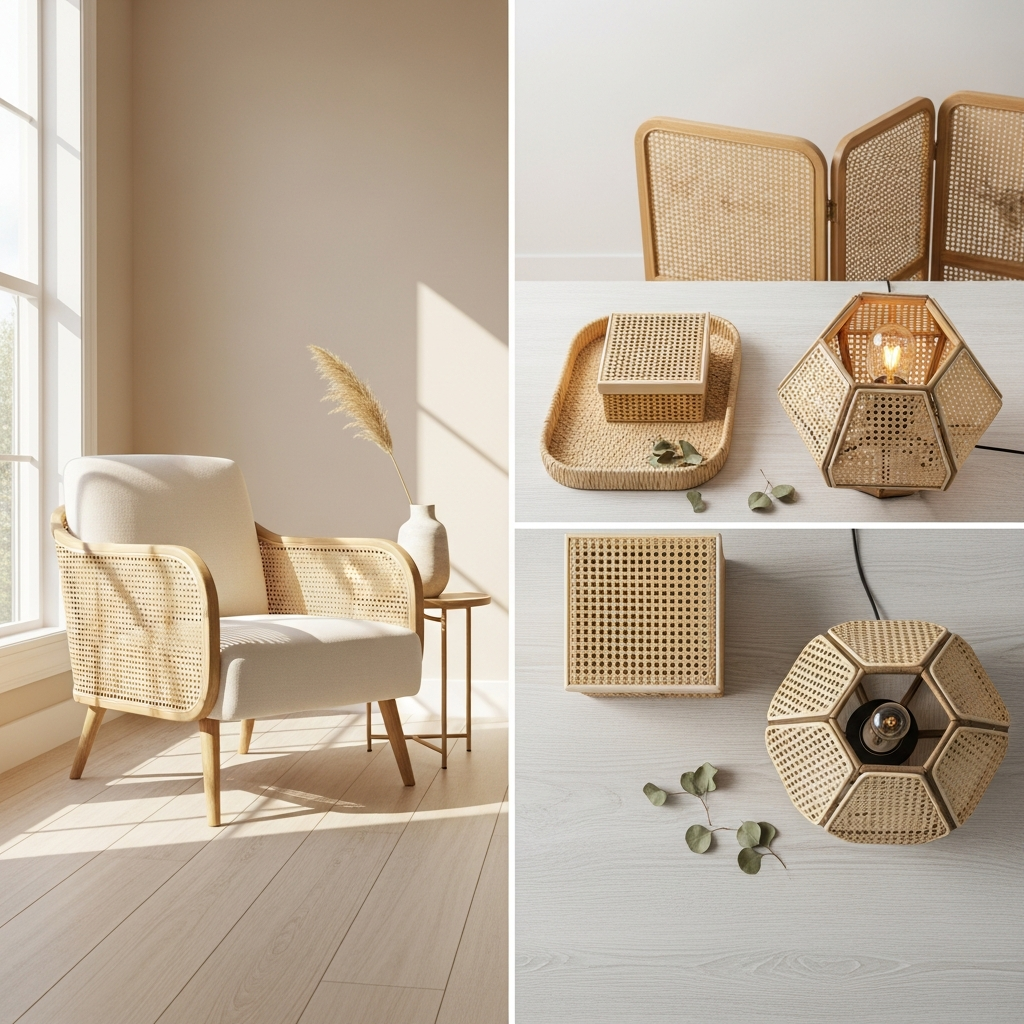
Need to separate a home office from a living area in a studio? Define a dressing corner? A cane webbing room divider is the answer. Build a simple, lightweight frame on feet, or hinge two or three framed panels together.
- Why it works: Unlike a solid partition, it creates a visual boundary while allowing light and air to flow through. It gives privacy without closing in a small space. It’s perfect for Indian homes where we need to carve out zones without blocking precious breeze or light.
3. The Dreamy Headboard (The Bedroom Upgrade)
Ditch the bulky, upholstered headboard. Make your own. Frame a rectangle of cane webbing that’s wider than your bed and mount it directly to the wall behind it.
- Why it works: It instantly creates a boho, relaxed, or Scandinavian vibe, depending on the frame. It’s airy, doesn’t collect dust, and makes your bed look like it belongs in a boutique hotel. Pair it with crisp white linen for pure bliss.
4. The Woven Lampshade (The Ambiance Creator)
We covered this briefly before, but it deserves its spot. Swapping a generic drum shade for one wrapped in cane is the fastest lighting upgrade that exists.
- Why it works: It transforms harsh light into a soft, dappled glow. The patterns it casts on your walls and ceiling at night are artwork you don’t have to buy. It’s the ultimate boho home accent.
5. The Decorative Cabinet & Wardrobe Inserts (The Kitchen/Bedroom Refresh)
Got plain, flat-panel kitchen cabinet doors or a boring wardrobe? You don’t need to replace them. Remove the inner panel (or work directly on the front) and inset a piece of cane webbing.
- Why it works: It turns mass-produced furniture into something custom and interesting. In the kitchen, it adds texture and a slight rustic charm. On a bedroom wardrobe, it feels elegantly tailored. It’s a creative use for cane webbing that changes the entire character of a piece.
6. The Framed Tray or Serving Board (The Functional Art)
This is a small project with huge impact. Take a basic wooden tray or a cut of solid wood. Create a smaller “window” frame and fix cane webbing underneath it. Seal it with a food-safe resin if you’ll use it for serving.
- Why it works: It elevates an everyday object into a conversation piece. It’s practical, beautiful, and feels incredibly curated. It proves cane webbing home accents can be both decorative and useful.
7. The Balcony or Pooja Room Screen (The Cultural Touch)
For a balcony railing that feels too exposed, or to create a subtle, beautiful screen for a pooja room niche, cane webbing is a natural fit. Attach it to a simple frame that fits your space. For balconies or semi-outdoor areas, artificial cane webbing offers the same woven look with better resistance to moisture and sunlight.
- Why it works: It provides a sense of privacy and sacred separation while maintaining a light, airy feel. It filters harsh sunlight into a soft, devotional glow, making it one of the most relevant rattan wall decor ideas for Indian homes.
8. The Art Mat or “Passe-Partout” (The Gallery Wall Twist)
Instead of using a plain white or colored mat inside your picture frames, use a small, finely-woven piece of cane. Mount your photo or print on top of it.
- Why it works: It adds a layer of incredible texture and depth to your gallery wall. It makes even simple line drawings or black-and-white photos look expensively framed and thoughtfully presented.
9. The Plant Holder & Wall Garden (The Greenery Partner)
We touched on a simple plant pouch, but take it further. Create a large, framed grid on your wall with multiple openings, each holding a small pot or a vial for water propagation.
- Why it works: It combines two big trends—natural textures and indoor greenery—in one stunning, living installation. The cane provides a perfect, neutral backdrop that makes the green plants pop.
10. The Ceiling Medallion or Cloud (The Look-Up Moment)
Why should walls have all the fun? Take a lightweight wooden frame, stretch cane webbing across it, and suspend it from the ceiling like a textured cloud or a modern take on a ceiling medallion above a dining table or bed.
- Why it works: It draws the eye up, adding architectural interest to a room with plain ceilings. It creates intimate, overhead-filtered light and a seriously designer look with very simple materials.
How to Make It Happen: The Simple Truth
The beauty of all these ideas? The technique is almost always the same.
- Build or Find a Frame: Simple pine or MDF battens are your friend. A pre-made picture frame or canvas can also be a great start.
- Staple & Secure: Stretch the webbing tightly over the back of the frame and staple it down. Start in the middle of each side and work outwards. For a finer look on things like trays, you can use a thin bead of strong adhesive.
- Finish & Mount: Paint or stain your frame if you like. Then, hang, place, or mount your creation.
The magic is in the material itself. Understanding the sustainability story of rattan and cane adds even more meaning to using this material beyond furniture. You are not building complex joints; you are framing texture
Conclusion
That roll of cane webbing is a roll of potential. It’s texture, light, warmth, and personality waiting to be unfurled. It’s the answer to that boring wall, that undefined corner, that too-plain piece of furniture.
Look around your home right now. See that blank space? Imagine it woven. See that problem corner? Imagine it solved with light and texture. This isn’t about following a trend; it’s about discovering a incredibly versatile tool for making your space truly, personally yours.
Ready to see what your walls have been missing?
Explore our collection of cane webbing patterns—from classic Sheet to airy French to modern Herringbone. Find the texture that speaks to you, and start framing your vision. Browsing cane webbing patterns and materials in one place makes it easier to turn these creative ideas into real home decor projects.
Frequently Asked Questions
I’m not a DIY expert. Can I really do this?
Yes. These projects are about vision more than advanced skill. The hardest part is cutting the wooden frame pieces straight—any local carpenter can do that for pennies. The rest is measuring, stapling, and hanging. It’s accessible creativity.
Which weave pattern should I choose for walls?
For a bold, graphic look: Herringbone.
For a light, airy, tropical feel: French (Open) Weave.
For a classic, textured, versatile backdrop: Sheet Cane.
It’s your mood board. Choose the pattern that creates the feeling you want.
Can I paint or stain the cane webbing?
You can, but you’ll lose the beautiful play of light through the weave. A better approach is to paint the frame a bold colour. The natural cane against a deep navy or black frame is incredibly striking.
Where do I start?
Start with the wall panel (#1) or the framed tray (#6). They are simple, have a huge impact, and will give you the confidence to try bigger things.