

A Buyer’s Guide to Choosing the Perfect Bamboo Lampshade
So you’ve decided. You’re done with that generic, mass-produced lampshade. You want light that has texture, that casts patterns, that feels alive. You’ve set your heart on a bamboo or cane lampshade. You can already picture that warm, dappled glow in your room.
But now, you’re stuck. The options are beautiful, but a little overwhelming. What size? What shape? Will it light up the whole room or just look pretty? How do you even hang it?
I get it. Choosing lighting is personal. Get it right, and it becomes the soul of your room. Get it wrong, and it’s a costly, awkward mistake. This isn’t about just picking a pretty shade; it’s about solving the lighting puzzle for your space.
Think of this as your personal consultation. We’re going to walk through the key decisions together, so you can click “buy” with absolute confidence. Let’s find your perfect glow.
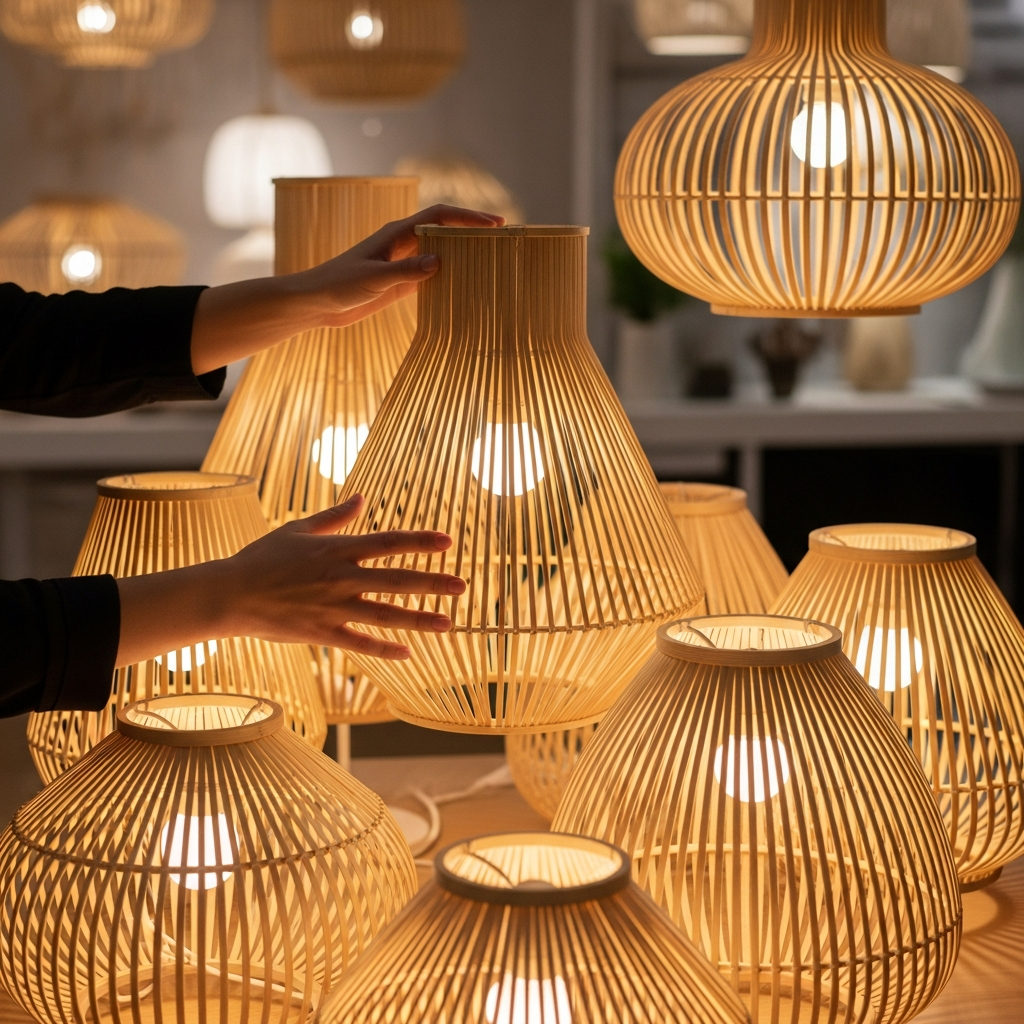
Step 1: The Foundation – Know Your Lighting Types
First, let’s decode the styles. They’re not just different looks; they serve different purposes.
- The Pendant Light: This is a shade that hangs from the ceiling by a cord, chain, or rod. It’s a statement. Perfect over a dining table, kitchen island, in a reading nook, or as a single dramatic piece in a living room. When people ask for a cane pendant light size guide, this is usually what they mean. Exploring different cane pendant lights can help you visualize how size and drop length affect the overall balance of a room.
- The Ceiling Bowl/Flush Mount: This shade attaches directly to the ceiling base, with no drop. Ideal for rooms with lower ceilings (common in many Indian apartments) where a pendant would hang too low. It provides lovely ambient light while sitting snug to the ceiling.
- The Table Lamp Shade: This is designed to sit on a table, plugged into a wall. It’s for task lighting (beside a bed for reading) or creating cozy pools of light in corners. You can buy a complete table lamp or just the bamboo lampshade to fit onto your own base.
The first step is to know which type meets your spatial needs.
Step 2: The Math—Getting the Size Right (This Is Very Important)
A shade that is too small looks shy and lost. One that is too big feels heavy and bossy. Everything is about proportions.
For a Table Pendant Light:
The shade’s diameter should be at least 12 inches (30 cm) less than the table’s width. A shade with a diameter of about 24 inches should fit on a table that is 36 inches wide.
Hanging Height: The bottom of the shade should be 30 to 36 inches (75 to 90 cm) above the table. This makes a small “pool” of light for talking without blocking anyone’s view.
For a Pendant in an Open Space (e.g., living room corner):
- Measure the room’s ceiling height. For standard 8-9 foot (approx. 2.4-2.7m) Indian ceilings, a total drop (from ceiling to shade bottom) of 24-30 inches (60-75 cm) is a safe, stylish bet. It feels intentional without looming.
For a Table Lamp:
- A simple rule: the shade’s height should be roughly 2/3 the height of the lamp base. The shade’s diameter should be roughly equal to the height of the base. This creates a balanced, stable look.
For a Ceiling Bowl/Flush Mount:
- Scale it to your room. In a standard bedroom, a 14-18 inch diameter is ample. In a larger hallway or living room, you can go up to 22-24 inches. Since it sits flush, err on the side of slightly larger rather than smaller to make an impact.
Step 3: The Character—Picking a Shape and Weave
This is where personality comes into play. The mood is set by the shape and the weave pattern.
Form:
Drum: the most modern and flexible shape. Works anywhere with clean lines. A beautiful and safe first choice.
Bell/Empire: The bottom is wider than the top. A classic, softer shape that feels a little more bohemian or traditional.
Cylinder: A tube that goes straight up and down. Very modern and graphic.
Pattern of Weaving:
Tight weave lets less light through, making the shade look more solid and defined, with a softer, more diffused glow.
Open Weave: Lets more light shine through, which makes the shadows on walls and ceilings stand out more. More airy and decorative. Traditional bamboo craftsmanship across different regions of India reflects the long-standing cultural value of woven lighting and decor elements.
Step 4: The Room – Matching the Shade to its Mission
Where will it live? The room dictates the function.
- Bamboo Lampshade for Bedroom: You want calm, not glare. A bedside table lamp with a medium-tight weave is perfect for reading. A larger ceiling bowl provides beautiful overall ambiance. Choose warm, soothing shapes.
- For the Dining Room: This is the classic pendant spot. Go for a size that commands the table (see sizing guide above). You want enough light to see your food, but in a warm, inviting tone.
- For the Living Room: Think layers. A large pendant or ceiling bowl can be your main ambient light. Then, add table lamps with cane shades in corners for texture. This is where you can play with different rattan lighting styles.
- For the Balcony or Verandah: Ensure the shade is rated for covered outdoor use. The play of natural and electric light through the weave in an outdoor space is pure magic at dusk. Understanding the basics of cleaning and maintaining cane lampshades ensures your lighting stays beautiful for years.
Step 5: The Technical Stuff— No one talks about this, but you have to!
This is what makes an idea into a working lamp.
The Bulb and Fitting: The B22 (Bayonet) is the most common ceiling fitting in India. This will come with most good-quality ceiling lights and pendants. Most table lamps have an E27 (Edison Screw) socket. Check the product description every time. This is normal; the bulb is almost never included.
What kind of bulb to buy is important for the glow. Use a warm white LED bulb with a color temperature between 2700K and 3000K. Don’t use cool white or daylight bulbs; they will ruin the cozy atmosphere. A single bright LED (like 9–12W) is enough for a pendant. A lower wattage (5–7W) works for a table lamp.
The Cord: Look at the length of the cord for pendants. Is it tall enough for the height of your ceiling? Is it possible to change it? A lot of modern pendants have cords that can be changed.
Conclusion
The Last Check: Visualize It in Your Space
Do this before you click “checkout”:
Tape it down. Put tape on the floor to show how big the shade you’re thinking about is. Does it fit in the room?
Make fun of the height. Put a tape measure from your ceiling or table to the height you want. Does it feel good?
Look at the specs. Take one last look at the fitting (B22/E27), the size, and the length of the cord.
You are buying more than just a lampshade. Browsing a curated bamboo lampshades collection makes it easier to compare shapes, weaves, and proportions before finalizing your choice. You’re buying the mood of your home at night, the first thing guests see when they walk in, and the soft light you read by. It’s important to get it right.
Are you ready to see the one?
Check off everything on this list and look through our hand-picked selection of bamboo and cane lampshades. Seeing all bamboo and cane lighting options in one place makes it easier to choose a piece that truly fits your space. Look for the piece that will become the center of your room, whether it’s a dramatic pendant or a cozy table lamp.
Frequently Asked Questions
Is it just decorative, or will it light up my room?
It provides beautiful, ambient light. It will not give you the bright, uniform glare of a white glass shade. That’s the point. It’s for atmosphere. For tasks like reading, pair it with other light sources (like a dedicated reading lamp). Think of it as mood-lighting that happens to be on all evening.
Can I use it with a dimmer switch?
Yes, and you absolutely should if possible! Pairing a warm LED bulb with a dimmer gives you complete control over the ambiance, from bright for dinner to soft for after-dinner chats. Just ensure your LED bulb is dimmer-compatible.
How do I clean it?
Regularly dust with a soft, dry brush (like a makeup brush). For marks, use a barely-damp cloth, wipe gently, and immediately dry. Never submerge it. Simple.
What if my ceiling doesn’t have a hook/wiring point?
For renters or concrete ceilings, there are excellent solutions. Look for “plug-in pendant light” kits. These have a cord that runs from the shade to a plug in your wall, and you can use a discreet hook in the ceiling to hold the cord in place. No electrician needed.
Will it match my [modern/Scandi/industrial] decor?
Absolutely. The natural texture of cane is the perfect organic counterpoint to sleek modern lines, cool Scandinavian tones, or raw industrial materials. It’s all about contrast. A cane shade in a minimalist room doesn’t look out of place; it looks essential.




2 comments
Pingback:
Cane Webbing vs Upholstery: Best Chair Restoration GuidePingback:
Buy Cane Webbing Online India: 2026 Buyer Guide TipsPro