

The Top 5 Tools Every Cane Weaver Needs
Let’s be clear about something from the start. You can try to restore a cane chair with a butter knife, a pair of rusty scissors, and a lot of hope. I know, because that’s how I started. The result was a wobbly, loose seat that looked sad and lasted about six months before it sagged completely. I wasted good material and a whole weekend.
The problem wasn’t my hands. It was my tools.
Working with cane isn’t like hammering a nail. It’s a specific craft, and it demands specific cane weaving tools. The right tool doesn’t just make the job easier; it makes the difference between a wobbly mess and a tight, professional finish that will last for decades. It’s the secret line between a frustrating hobby and a rewarding skill.
After years of trial and error—mostly error at the beginning—I’ve narrowed it down to the five non-negotiable items. These are the tools for furniture restoration that you will use on every single project. Forget the fancy gadgets; master these, and you can handle 95% of all cane webbing work.
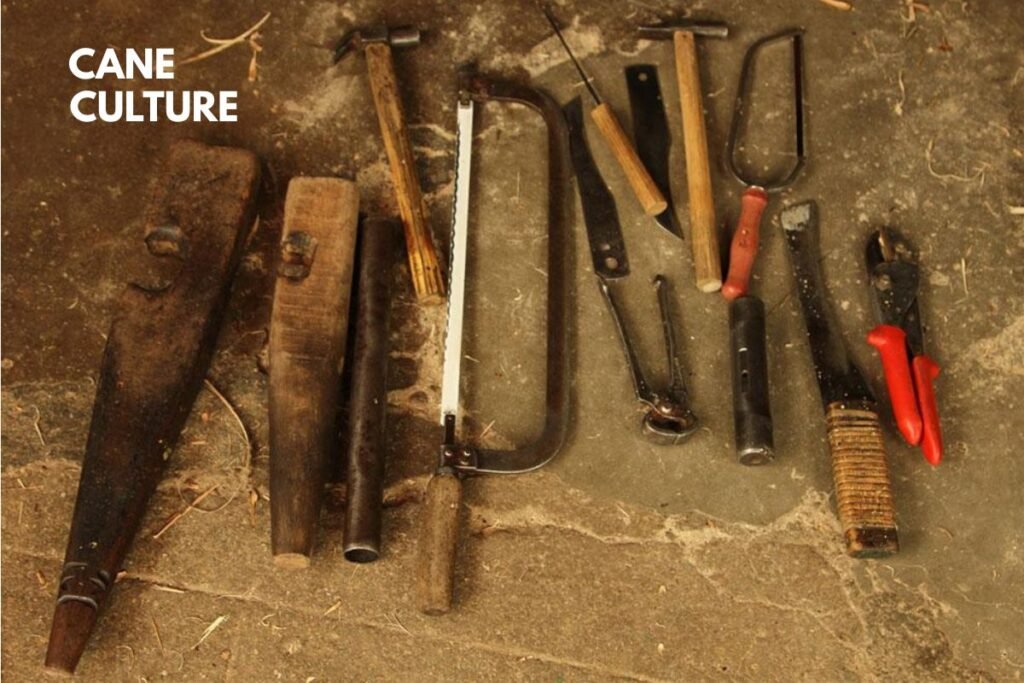
1. The Spline Roller: Your Most Important Tool
If you buy only one specialty tool, make it this one. People try to use screwdrivers, chisels, or their thumbs. Don’t. A proper rattan spline tool is designed for one critical job: pressing the damp cane webbing down into the groove of your chair frame before you lock it in with spline.
It has a rounded, polished end that fits the groove perfectly. You roll it along the channel with firm pressure. This action tucks the webbing deep and evenly. If you skip this, the spline will sit on top of the webbing instead of locking it down. That’s the number one reason DIY seats come out loose.
What to look for: A solid, one-piece metal roller with a comfortable wooden or plastic handle. The wheel should spin smoothly. A cheap, flimsy one will bend under pressure. This is your foundation. Everything else depends on this step being done right. Seeing the spline roller used in a step-by-step cane webbing installation makes its role in achieving a tight, professional finish much clearer.
2. A Sharp, Heavy-Duty Utility Knife
You’ll use this for two crucial cuts: trimming the webbing to size and, most importantly, cutting the cane spline. Spline is a tough, fibrous material. Kitchen scissors will crush it. A dull blade will tear it, leaving a ragged edge that won’t seat properly in the groove.
A sharp utility knife with replaceable blades makes a clean, square cut every time. When you’re trimming the excess webbing after installation, a sharp blade will slice cleanly through the fibers flush against the spline, giving you a perfect, finished edge.
Pro Tip: Keep a pack of fresh blades handy. Change them as soon as you feel the knife starting to tear instead of cut. A sharp blade is also safer—it requires less force, so you’re less likely to slip.
3. A Small, Lightweight Hammer
You don’t need a carpenter’s hammer. You need a small, precise one, often called a tack hammer or a cabinetmaker’s hammer. Its job is to gently tap the wooden spline into the groove after you’ve rolled the webbing down.
The key word is tap. You are guiding the spline, not forcing it. A heavy hammer will split the delicate spline or dent your furniture frame. A light hammer gives you control. Use short, gentle taps, working your way slowly along the groove. The spline should sink in smoothly.
4. A Narrow, Flat-Blade Screwdriver (Your “Pry” Tool)
This isn’t for prying off old webbing—that’s a different tool. This small, flat-head screwdriver (about 1/4-inch wide) is for fixing mistakes. Even professionals need it.
Sometimes a section of spline won’t seat right, or you notice a wrinkle in the webbing after you’ve started. Instead of panicking, you carefully insert the flat blade under the spline in that section, lift it just enough to free the webbing, re-roll the area, and tap the spline back down. It’s your “undo” button. It saves you from having to rip out an entire side.
5. A Solid, Stable Work Surface
This might seem obvious, but it’s the most overlooked tool. You cannot properly tension cane webbing on a wobbly table or while balancing a chair on your knees. You need a solid, waist-height bench or table that doesn’t move.
A stable surface allows you to use both hands to pull the webbing tight while you staple or roll. It lets you move around the piece with your tools in hand. If your frame is moving, your tension will be uneven, and the final seat will be loose in one corner. A pair of sturdy sawhorses and a thick plank of wood is a perfect start.
The Honest Truth About “Alternative” Tools
You will see people online using awls, chisels, or modified screwdrivers. Can you get by with them? Maybe. But you are fighting the material. A screwdriver has corners that can catch and tear the individual cane strands. An awl can’t apply the broad, even pressure of a roller. Using alternatives almost always leads to a weaker seat and more frustration. These five DIY cane tools are inexpensive, but they are investments in your results and your sanity.
Where to Find These Tools in India
A decade ago, these were hard to find. Now, with good online marketplaces, you can get everything. Look for “cane weaving tool kits” that often include the roller, a small hammer, and sometimes an awl. For the utility knife and screwdriver, any good hardware store or online retailer will have them. The most important thing is to avoid the absolute cheapest option. A slightly better-quality roller will last a lifetime. Buying cane weaving tools and materials together helps ensure the spline, webbing, and roller are compatible.
Of course, the tools are useless without good material. High-quality natural cane webbing is essential because even the best tools can’t compensate for weak or uneven material. Your cane webbing supplies need to be just as reliable. For premium, consistent natural and artificial cane webbing and spline that matches these professional tools, have a look at our collection.
Start with the right tools. Respect the craft, and it will reward you with furniture that isn’t just repaired, but revived. The feeling of sitting on a chair you’ve re-caned yourself, knowing it’s drum-tight and beautiful, is worth every rupee spent on these five simple things. Now go build something that lasts. For outdoor or high-humidity projects, artificial cane webbing pairs well with these tools and reduces the risk of material failure.
Frequently Asked Questions
Can’t I just use the old tools I already have?
You can try. But cane work is specific. The wrong tool often damages the material. A torn piece of webbing or split spline means starting over and wasting money. The right tools protect your investment in the cane itself.
I’m only doing one chair. Do I really need to buy these?
Yes. Think of it this way: the cost of these basic tools is less than the cost of the cane you’ll waste if the job goes wrong. And if you do a good job, you’ll probably want to do another. They last forever.
What’s the one tool I can’t compromise on?
The spline roller. There is no effective substitute. Every other tool on this list has a common alternative (a different hammer, a different knife). The roller’ function is unique to this craft.
Where is the best place to start for a beginner?
Start with the material. Get a small roll of cane webbing and a length of spline. Then, get the roller and a utility knife. With just those, you can complete a simple seat. Add the hammer and screwdriver as you take on more complex frames.
Understanding the rattan and cane craft background can give beginners a deeper appreciation of why proper tools and techniques matter.