
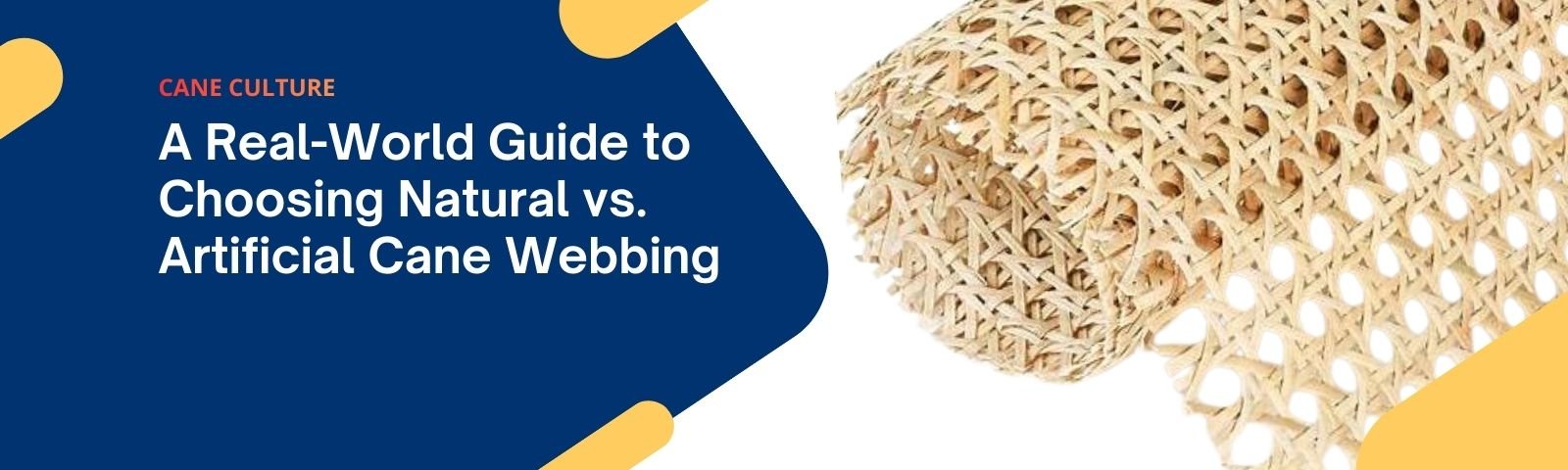
A Real-World Guide to Choosing Natural vs. Artificial Cane Webbing
Let’s be real. You came here because you’re stuck. You might be looking at a sad-looking balcony set or the chair frame you made in the garage. You know you want that gorgeous woven cane look, but now you’re stuck on the major question: Natural vs Artificial cane webbing.
I understand. I have stood in my own workspace, holding one of each and been absolutely torn. There are a thousand different opinions on the internet. One is required by your local carpenter. Your friend who tried to do it himself warns you about the other one. You might want to give up and get a plastic chair instead.
Please don’t do it. Once you get past all the noise, the choice is rather clear. This isn’t about which material is “better.” It’s about which one is best for your life, your climate, and your project. I’ve used both for years, sometimes with great success and other times with costly mistakes. I’ll make it easier for you by showing you just how to choose.
First things first: What are we really talking about?
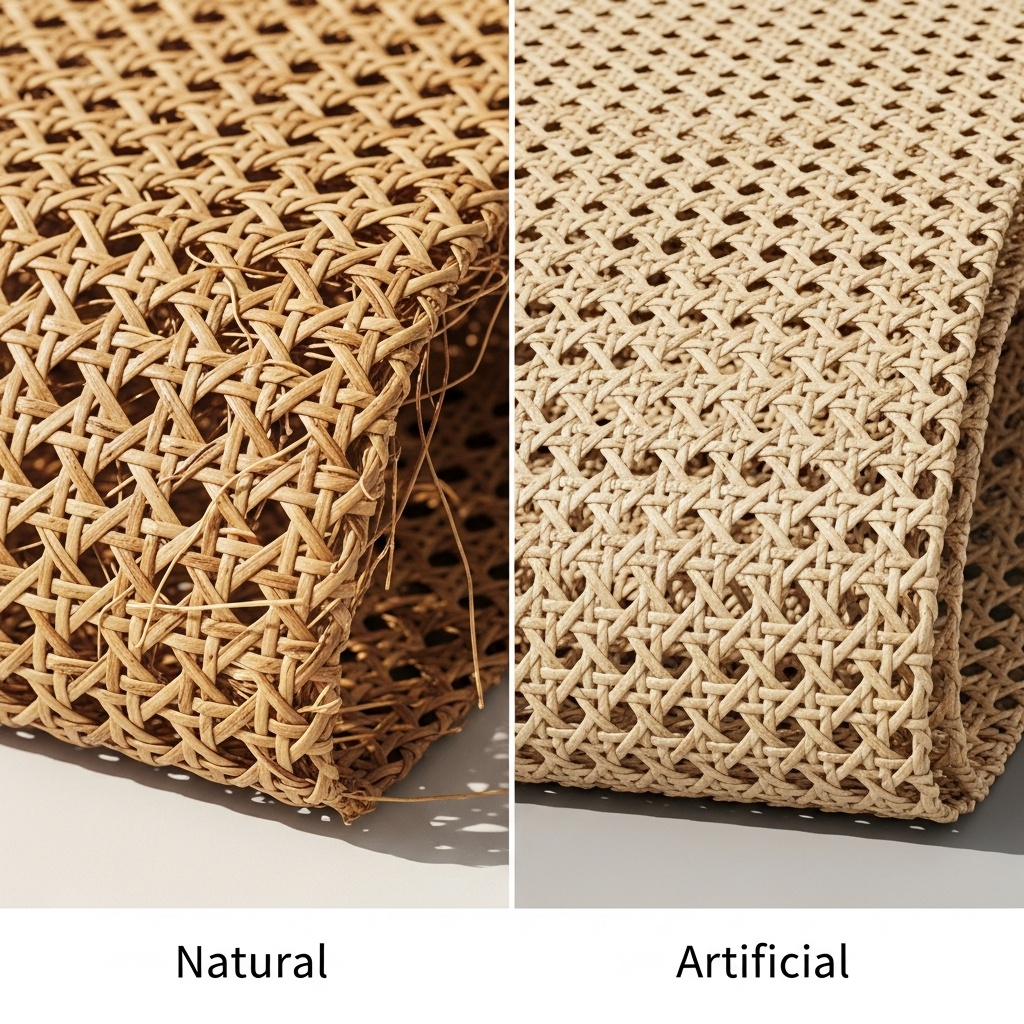
Let’s make sure we’re on the same page before we get started. In pictures online, they may look the same, but in your hands, they tell two different stories.
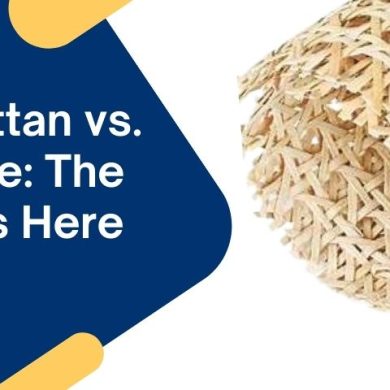
Your grandparents’ furniture was composed of natural cane webbing. The rattan palm is where it comes from. The workers peel off the outer bark and then weave the interior threads by hand into sheets. It smells a little like grass and dirt when you take it out of the box. You can feel the grain, the small flaws, and the vitality in it if you run your finger over it. There are small differences between each sheet. That’s the point.
Synthetic cane webbing (you might also see it labeled artificial cane webbing or PVC cane webbing) is a new thing. It’s constructed of plastic polymers that have been weaved together to look just like the real thing. It feels smooth and even. There is no difference in hue from one end of the roll to the other. There is no smell. It was made with great care.
One is actual wood with a unique grain, and the other is a laminate that looks just like wood. Both create furniture that looks great. You just need to know which one is right for your table.
Let’s put them head to head and see what happens.
A table is helpful, but the true details are what count. Here’s the real deal.
A table helps, but the real details matter. Here’s the honest breakdown.
| The Deciding Factor | Natural Cane Webbing | Artificial Cane Webbing |
| What it’s made from | The heart of the rattan vine. | Plastic fibers (like PET or PVC). |
| How it looks & feels | Warm, organic, authentic. Has texture. Color varies. | Consistent, clean, uniform. Very smooth feel. |
| Its superpower | Breathability and that classic, timeless character. | Brutal durability. Laughs at weather. |
| Its fatal flaw | It’s a plant. Sun and water destroy it. | It can look too perfect. Lacks a “soul.” |
| Installation process | You must soak it. 10-15 mins in water. No choice. | Unroll, cut, and go. No soaking. |
| Where it belongs | Inside your home. Living rooms, bedrooms, dry studies. | Outdoors or wet areas. Balconies, bathrooms, poolside, cafes. |
| Facing Indian weather | Will warp in Mumbai humidity. Will crack in Rajasthan sun. | Built for it. UV-resistant, waterproof, handles monsoon rain. |
| The green question | Biodegradable. A renewable resource. | Not biodegradable, but lasts so long it reduces waste. |
The Deep Dive into Natural Cane: Beauty with Rules
I really like natural cane. I made a set of dining chairs for my mom as a project. The only option was to use natural cane webbing. The material is warm in a way that synthetic can’t copy. It glows when light shines through it. This natural glow is the same reason bamboo and cane lighting works so well in warm, ambient interior spaces.
Here’s why this might be the best cane webbing for your furniture:
The Real Feel
This is the big deal. It looks and feels “real” because it is. Nothing else comes close for restoring an old object or making something in the style of the past. This is what “eco-friendly cane webbing” means.
It Breathes
This is a big, underappreciated benefit. The weaving lets air pass through it easily. This means that on a dining chair, there won’t be any sticky back on a hot summer day. It stops musty smells in a cabinet door.
It gets older with grace
A natural cane seat that is carefully cared for doesn’t get old; it acquires character. The color becomes a deep honey.
Now, here are the honest truths you need to know:
The Soaking Ritual is Required. You can’t miss it. If you try to stretch it dry, it will break with a loud noise that will scare you. Put it in a tub of water at room temperature until it becomes soft.
It is an indoor material. Period. I discovered this the hard way with a stool on my porch. It was a sagging, moldy disaster after one monsoon season. It can dry out and become brittle over time, even in a sunny area by a window.
It needs a stable place to live. Stay away from air conditioner vents, direct blasts of heat, and, of course, rain.
Pick natural if:
If your project is 100% for indoors, you want a traditional or rustic style, and you’re comfortable with the extra step of getting ready. It’s not meant to be used every day on the patio; it’s for heirlooms.
Our Natural Cane Webbing Rolls have a real texture that you can see.
The Truth About Artificial Cane: The Tough Guy
After moving to a coastal city, I became a fan of artificial rattan webbing. My idealistic ideas about natural materials outside were actually swept away. The fake stuff just stays alive.
Here’s why it fixes so many problems:
It’s basically indestructible. This is the best cane webbing for outdoors. Sun? It is stable in UV light. Rain? It won’t get wet. Is it humid? It doesn’t matter. My balcony furniture has been through three monsoons in Chennai and still looks new.
Maintenance is a joke. If you spill coffee, get caught in the weather, or let dust build up, just rinse it out or wipe it down. That’s all.
It’s easy for beginners to use. Less soaking means less stress. It is easy to work with right out of the roll, which is great for your first cane webbing project.
Perfect Consistency. Making six chairs? All the panels will be the same. For a clean, modern style, this is a major issue.
What you give up for that toughness:
The “Soul” Factor: Purists (and I was one) will say it doesn’t have any personality. It will never get that beautiful patina. In ten years, it will appear the same as it does now.
The feel: It’s smooth, not rough. Some people think this is more modern. It doesn’t feel as real to some people.
The trade-off for the environment: It’s made of plastic. But, and this is a huge but, it lasts for ten years outside, so you won’t have to throw away a bad natural chair every few years.
Choose artificial if:
Your project will be outside in the sun, rain, or high humidity (such on balconies, in bathrooms, or in commercial settings), you don’t want to have to do any maintenance, or you’re new to DIY and want to make things simple.
Look at how strong our Artificial Cane Webbing Rolls are.
Your No-Nonsense Decision List
Stop thinking too much. Please answer these questions in order.
1. Where will this be? Be quite honest.
Inside, in a room with climate control? ⇒ Natural is still in the race.
On a patio, in a garden, or on an open balcony? ⇒ It must be fake. This is the most crucial guideline.
In a bathroom, kitchen, or on a covered but airy porch? ⇒ The splashes and humidity make Artificial the best choice.
2. What’s the weather like where you live? (This is very important in India)
Coastal (Goa, Mumbai, Kochi): Salt and humidity kill natural cane. Only artificial for things that aren’t completely within.
Extreme Heat & heat (Delhi, Rajasthan): The heat will break and cook natural cane. Artificial is made for the UV.
Heavy Monsoon (much of India): Constant wetness causes mold and slackness in natural cane. Artificial sheds water.
3. What matters more: timeless beauty or bulletproof strength?
Do you want to fix up an old family heirloom for your living room? That’s a work for Natural cane webbing.
Do you want to build a daybed on a rooftop that gets full sun? That’s a work for Artificial cane webbing.
4. How useful are you really?
Is this your first big DIY project? Artificial is far less scary because it doesn’t need to soak and is easy to handle.
Have you ever worked with materials before? You can soak and carefully stretch Natural.
Final Thoughts
The last word is that there is no winner, only the right choice.
So, what’s the difference between natural and manufactured cane webbing? The argument is over when you think about what will happen to your project in the future.
Picture your finished work five years from today. Is it in a warm, dry corner of your living room, looking gorgeous and well-loved? Then you want something natural.
Is it still looking wonderful for your morning coffee on your balcony after going through several monsoons and summers? Then you needed fake.
Both of the materials are great. Resources from Cane Culture can help you match the right type of cane webbing to your climate, usage, and long-term expectations. The failure arises when they are employed in the wrong way.
Find the Right Material at Cane Culture
You can now make a smart choice since you know how to pick. Browsing cane webbing materials in one place makes it easier to compare natural and artificial options side by side. We have high-end versions of both at Cane Culture since various tasks need different tools.
For the real, breathable beauty of a classic, check out our Natural Cane Webbing Rolls.
For performance that can handle the weather and is durable enough for modern life: Look through our Artificial Cane Webbing Rolls.
Still unsure about your project? Reach out. Let us know what you’re making and where it’s going. We’ll assist you choose because the best project is one that lasts.
Frequently Asked Questions
Won’t fake cane look cheap and fake on my balcony?
Not if you buy something decent. The cheap, glossy material does look horrible. But high-quality artificial rattan webbing has a matte surface and a tight weave that makes it look real. Your guests will only see magnificent cane furniture from a few feet away.
“I want to care about the environment.” Isn’t plastic the wrong thing to do?
It’s not that easy. Yes, natural cane breaks down in the environment. But if you put it on an outside chair and it rots in two years, you’ve squandered a natural resource. A high-quality artificial weave that lasts more than ten years means you don’t have to change it all the time. For inside, natural is the better choice. When it comes to the outdoors, artificial’s lengthy life can be the better choice.
My carpenter says he only works with natural. Should I look for someone else?
Not always. A lot of excellent carpenters learned how to work with natural materials. Give him this guide. Say that the material needs to be synthetic for an outside project to last. A skilled craftsman can change things up, especially if you give them the correct synthetic cane webbing.
Can I use the fake kind inside?
Of course! A lot of people use them in kitchens, kids’ rooms (easy to clean up!), and modern furniture. It’s a stylistic choice to make things look smooth and even.
I’m still not sure. What is the easiest approach to make a choice? Will this piece ever get wet or be in direct sunlight?
If the answer is YES, buy artificial.
You can confidently choose Natural if the answer is NO.




7 comments
Pingback:
Cane Webbing DIY Projects: Easy Cane Decor Ideas GuidesPingback:
History of Rattan Furniture and Modern RevivalPingback:
DIY Cane Room Divider Plans with Measurements GuidePingback:
How to Clean and Maintain Your Cane Furniture & Lampshades - CANE CULTUREPingback:
Secrets of the Craft: A Day with Mohsin, the Master Cane Weaver - CANE CULTUREPingback:
Bamboo vs Rattan vs Wicker: Key Differences ExplainedPingback:
Mixing Rattan with Wood Metal for Stylish Interiors